
- ISBN
- 9798233389726
- Genre
- Algemeen
- Verschenen
- 14-03-2026
- Bindwijze
- Ebook EPUB
- Taal
- Engels
- Uitgever
- ?Ananta Kumar Nath
- Auteur(s)
- Ananta Kumar Nath
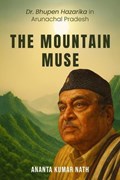
As the centenary of the birth of Bhupen Hazarika is being celebrated across India and beyond, another historic milestone quietly accompanies the moment, the golden jubilee of the film Mera Dharam Meri Maa, the first Hindi feature film associated with Arunachal Pradesh. This book brings these two significant occasions together, exploring a lesser-known chapter in the life of the legendary singer, composer, filmmaker, and cultural visionary.
Drawing from personal encounters, interviews, and conversations with artists who participated in the making of the film, the author reconstructs a series of untold stories surrounding its creation. Through meetings with actors, technicians, musicians, and individuals who were closely associated with the project, the narrative uncovers memories that have rarely appeared in written histories. These voices illuminate how the film emerged in a remote and culturally rich landscape at a time when Arunachal Pradesh was still largely unknown to the wider Indian film industry.
At the heart of the book lies the journey of Bhupen Hazarika himself—a bard whose artistic curiosity led him beyond the cultural boundaries of his home state of Assam into the mountainous world of Arunachal Pradesh. There he engaged deeply with indigenous communities, their music, language, and traditions. His connection with the region resulted in lasting contributions: he composed the state song of Arunachal Pradesh and directed the pioneering film Mera Dharam Meri Maa, a project that symbolized cultural dialogue between the hills and the plains.
Born in 1926 in Assam, Hazarika was far more than a regional artist. His life unfolded across continents, reflecting the spirit of a global intellectual and cultural ambassador. During his travels he encountered some of the most influential figures of the twentieth century, including Pablo Picasso and Paul Robeson, whose ideas and artistic philosophies shaped his worldview. These international experiences enriched his music and cinema, allowing him to blend local realities with universal human themes.
Through historical reflection, personal narrative, and cultural documentation, this book traces the intersection of music, cinema, and regional identity. It portrays Hazarika not only as a legendary singer but also as a cultural bridge-builder who helped bring the stories of Arunachal Pradesh to a wider audience.
Ultimately, the work serves both as a tribute and a record, celebrating the centenary of a visionary artist while preserving the memories of a film that marked a significant moment in the cultural history of the Eastern Himalayas.