
- ISBN
- 9798233204111
- Genre
- Algemeen
- Verschenen
- 12-12-2025
- Bindwijze
- Ebook EPUB
- Taal
- Engels
- Uitgever
- ?Arshad Mahmood
- Auteur(s)
- Arshad Mahmood
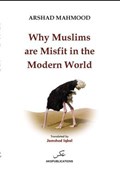
Are Muslims destined to keep clashing with modern civilization or is there still a way to reclaim joy, freedom, and dignity in a world that refuses to stand still?
This book, first written in Urdu more than 25 years ago, is not a cold academic study. It is a passionately fearless exploration of why so many Muslim societies find it hard to adapt to modern values like gender equality, free speech, secular governance, and human rights.
This isn't just another attack on religion, but a call for transformation; a vision of what life could be if the suffocating grip of fear and dogma were loosened.
What You'll Discover Inside
Why This Book Matters Now
We live in an age where multiculturalism is fraying, where nationalism and fundamentalism crash into each other, and where people everywhere are asking: How can we live together?
This book offers a rare lens of a critique from within. Written by someone who lived through the suffocation, it doesn't preach from the outside. It exposes the machinery of fear, shame, and silence that keeps millions trapped and shows what must change if peace and progress are to become real possibilities.
Who Should Read This Book
The Promise of This Book
By the time you finish, you won't just understand why Muslims are often misfit in the modern world. You'll see what it would take to make them fit without losing their humanity.
You'll come away with the realization that joy, love, beauty, and reason are not luxuries but the very keys to freedom.
What others say
Arshad Mahmood contends that an unwavering focus on divine edicts from past millennia has left Muslims ill-equipped for the political and intellectual challenges posed by an age where progress and prosperity are inextricably linked to scientific advancement, technological innovation, and the exercise of reason. The book offers crucial insights for anyone seeking to understand the predicament facing Muslims globally.
Pervez Hoodbhoy
Author and Professor of Physics, Pakistan
According to Journalism Media Platform, 47% of Pakistani women face domestic violence. The eminent Egyptian sociologist Halim Barakat has noted that if there is violence in the home, the society will be violent.
Arshad Mahmood laid bare the mechanism of that violence, detail by detail, nearly 30 years ago in this book.
For the Islamists, the culture in which they have been raised has suffocated them and in term they seek to make us experience and repeat their suffocation through violent bonding, having no sense of true personal freedom, creativity nor joy for life.
Nancy Hartevelt Kobrin
Ph.D., USA