
- ISBN
- 9798233410031
- Genre
- Algemeen
- Verschenen
- 01-03-2026
- Bindwijze
- Ebook EPUB
- Taal
- Engels
- Uitgever
- ?Dr Naim Tahir Baig
- Auteur(s)
- Dr Naim Tahir Baig
BOOK DESCRIPTION
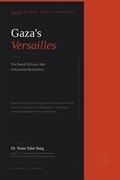
Gaza's Versailles: The Board of Peace and Palestinian Humiliation
By Dr. Naim Tahir Baig
In June 1919, the economist John Maynard Keynes walked out of the Paris Peace Conference in despair. He had watched the most powerful nations on earth design a settlement not for peace, but for punishment — one that stripped Germany of agency, dignity, and self-determination in exchange for the strategic preferences of the victorious powers. He returned home and wrote The Economic Consequences of the Peace, warning that Versailles would not hold. Twenty years later, Europe was in ruins. His warning had not been heard.
Gaza's Versailles: The Board of Peace and Palestinian Humiliation argues that this warning — the most consequential unheard warning of the twentieth century — is being ignored again. As the international community assembles a governance and reconstruction framework for post-war Gaza, the structural parallels with Versailles are not rhetorical or superficial. They are architectural. Both frameworks were designed primarily by external powers. Both offer the weaker party economic benefits in lieu of political rights. Both address the symptoms of conflict rather than its causes. And both treat the most affected population — the people who must actually live under the settlement — as a problem to be managed rather than a people to be heard.
Spanning twelve chapters and drawing on primary documents, international law, Palestinian testimony, and the scholarship of historians from Benny Morris and Rashid Khalidi to Margaret MacMillan and Ilan Pappe, this book applies a rigorous four-test analytical framework — Agency, Grievance, Dignity, Durability — to three historical cases: the Treaty of Versailles itself, the Oslo Accords and their collapse, and the Gaza Board of Peace as proposed in the post–October 7 diplomatic environment. The framework is structural and comparative, not partisan: it measures settlements against the evidence of what makes them durable or fragile, regardless of the nations or peoples involved.
Gaza's Versailles is a work of comparative historical analysis applied to a live political crisis. It is addressed to scholars, policymakers, diplomats, journalists, and every reader who believes that the question of whether international settlements produce justice or merely defer it is among the most consequential questions of our time. The architects of Europe's post-war order in 1919 had the evidence before them, the warnings around them, and the political will to ignore both. The architects of Gaza's future have the same evidence, amplified by a century of additional history. The question this book poses — with scholarly rigour, moral seriousness, and the full weight of the comparative record — is whether they intend to pass the test that Versailles so catastrophically failed.