
- ISBN
- 8596547880943
- Genre
- Algemeen
- Verschenen
- 10-01-2026
- Bindwijze
- Ebook EPUB
- Taal
- Engels
- Uitgever
- Quickie Classics
- Auteur(s)
- Joseph Conrad ; Harriet Gainsborough ; Connor Wells
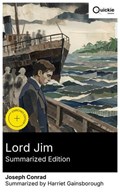
Lord Jim traces the fate of a young British officer whose moment of cowardice aboard the pilgrim-ship Patna brands him for life. Through Charles Marlow's layered narration, Conrad deploys impressionistic, recursive storytelling that moves between inquiry and reminiscence, testimony and rumor. Set in a late-Victorian maritime and colonial world, the novel probes honor, guilt, and the hazards of the romantic temperament, following Jim's exile and remaking in Patusan, where leadership and violence test whether a life can be redeemed. Joseph Conrad—born Józef Teodor Konrad Korzeniowski in partitioned Poland—served two decades in the British Merchant Service, sailing to the Malay Archipelago that animates this book. Writing in adopted English and first serialized in Blackwood's Magazine (1899–1900), he turned professional experience into moral inquiry, distrusting imperial platitudes and showing how language and perspective shape judgment. Marlow, his recurring witness, embodies Conrad's skepticism about easy heroism and the limits of self-knowledge. Readers of modernist narrative, maritime literature, and postcolonial studies will find Lord Jim indispensable: a taut, unsettling study of responsibility that rewards close attention to voice and structure, and a moving meditation on failure, courage, and the cost of imagined nobility. Quickie Classics summarizes timeless works with precision, preserving the author's voice and keeping the prose clear, fast, and readable—distilled, never diluted. Enriched Edition extras: Introduction · Synopsis · Historical Context · Author Biography · Brief Analysis · 4 Reflection Q&As · Editorial Footnotes.