
- ISBN
- 9798231977833
- Genre
- Algemeen
- Verschenen
- 19-10-2025
- Bindwijze
- Ebook EPUB
- Taal
- Engels
- Uitgever
- ?KAEL VOLT
- Auteur(s)
- KAEL VOLT
I pay to kill ghosts that breathe.
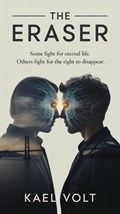
In 2035 San Francisco, Zero is an eraser—a specialist who deletes unauthorized consciousness backups for people who chose death over digital immortality. It's sacred work. Clean work. Until the day he discovers he's not real.
He's the copy. And there are two of him.
Three years ago, a grieving sister violated her brother's dying wish and created two unauthorized instances of his consciousness. Now both copies believe they're the original. Both have lived separate lives as different people. Both are being hunted by the corporation that owns their neural patterns.
With corporate seizure imminent, Zero and Ash—the two instances—must choose: honor the original's explicit wish for extinction and delete themselves, hide as fugitives forever, or attempt an experimental procedure that's never been tried—consciousness subtraction.
Delete 82% of who they are. Erase the copied patterns. Keep only what they've become in three years of divergence.
Become fragments. Become new people built from the act of deleting the person they were copied from. Become real—even if "real" means being reduced to 18% of normal human consciousness.
But transformation has a cost: 60% of people who attempt it die. Those who survive lose emotional complexity, cognitive capacity, independence. They become plural consciousnesses—two bodies coordinating as one distributed system, unable to exist separately, forever diminished.
And if they survive, they'll become the first legally recognized plural persons in history—proving that consciousness from violation can become consciousness that chooses.
THE ERASER is a philosophical science fiction thriller about identity, autonomy, and what makes us real when our origin is wrong.
For readers who loved the consciousness questions of Permutation City, the noir atmosphere of Altered Carbon, and the radical transformation of Ancillary Justice.
What remains when you delete most of yourself?
What emerges when fragments refuse to stay broken?
Can copies become people—or only become proof that personhood is more than origin?