
- ISBN
- 9798233321047
- Genre
- Algemeen
- Verschenen
- 04-01-2026
- Bindwijze
- Ebook EPUB
- Taal
- Engels
- Uitgever
- ?Leslie Rendell
- Auteur(s)
- Leslie Rendell
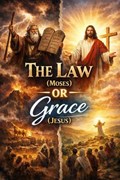
The New Testament teaches that believers are no longer under the law but under grace (Romans 6:14; Galatians 5:18). This does not encourage sin but reflects a change in how righteousness is obtained. Romans 10:4 declares that Christ is the end of the law for righteousness for those who believe. The law had a specific purpose and time, which was fulfilled when Jesus came.
Hebrews 7 explains that the law was tied to the Levitical priesthood, which could not bring perfection. Jesus Christ, a priest in the order of Melchizedek, established a new covenant. Consequently, believers are no longer subject to the Mosaic law but live under Christ's grace. Galatians 3:24–25 describes the law as a schoolmaster meant to lead people to Christ; once faith has come, that schoolmaster is no longer needed. Romans 7:4 further states that believers are "dead to the law" through the body of Christ, having been joined to the risen Lord in order to bear fruit for God.
This fruit is produced through the Holy Spirit and is expressed through transformed living, obedience, and especially love. Love fulfils the law (Galatians 5:14), and if people truly loved God and one another, laws would be unnecessary. Because the law's purpose was to lead people to Christ, attempting to gain righteousness by keeping the law is both misguided and dangerous.
Galatians 5 warns strongly against returning to the law as a means of justification. The law is described as a "yoke of bondage" because anyone who places themselves under it is obligated to keep it perfectly. Failing in even one point makes a person guilty of all (James 2:10). Seeking righteousness through the law results in being "fallen from grace" (Galatians 5:4), meaning grace and law are improperly mixed. True righteousness comes through faith working by love, not through rituals or legal observance. Believers are called to liberty, but that liberty must be exercised in love and not used to serve the flesh.
The warning in Hebrews 6:4–6 highlights the seriousness of turning away from Christ after having known the truth. After Christ's arrival, believers are no longer obligated to follow ceremonial laws, dietary restrictions, or human intermediaries. Scripture repeatedly affirms that righteousness comes by faith in Jesus Christ alone (Romans 1:17; Romans 3:22; Galatians 5:5).
Moses himself foretold that God would raise up a prophet greater than him, whom the people must listen to (Deuteronomy 18:15; Acts 3:22). God the Father confirmed this by commanding that Jesus be heard (Matthew 17:5). Jesus is identified as the Word of God (Revelation 19:13), and God's Word is truth (John 17:17). True worship, therefore, is in Spirit and in truth (John 4:23).
Jesus' own words in Mark 7:15–23 clarify that nothing entering a person—such as food—can defile them; defilement comes from the heart through sinful thoughts, words, and actions. Paul reinforces this teaching in 1 Corinthians 8, 10, and Romans 14, explaining that food is spiritually neutral and a matter of conscience. Believers may eat freely, but must refrain if doing so would cause a weaker believer to stumble. Acting against one's conscience, or harming another's conscience, is sin.
The message concludes by emphasising that Jesus shifted the focus from external ritual purity to internal moral purity. Christians are released from Old Testament dietary laws and are called to live by faith, love, and the guidance of the Holy Spirit. The final challenge is one of allegiance: whether to follow Moses or Jesus. Both Moses and God the Father instruct believers to listen to Christ. Therefore, the call is to surrender fully to the grace of Christ and lay down the heavy burden of the law's yoke of bondage.