
- ISBN
- 9798233141447
- Genre
- Algemeen
- Verschenen
- 07-03-2026
- Bindwijze
- Ebook EPUB
- Taal
- Engels
- Uitgever
- ?Michael Bradley
- Auteur(s)
- Michael Bradley
What does segregation look like when it isn't written into law - when it's enforced socially, through credibility attacks, exclusion, and pressure to conform?
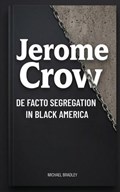
In Jerome Crow: De Facto Segregation in Black America, Michael Bradley introduces "Jerome Crow", a modern, informal segregation system aimed at people perceived as "not Black enough" or "too White" - whether in appearance, speech, behavior, or character. Rather than relying on courts, statutes, or official policy, Jerome Crow operates through the everyday mechanics of belonging: who gets protected, who gets doubted, and who gets pushed to the margins until they self-remove.
Blending historical framing, testimony-informed patterns, and rigorous argument-building, Bradley maps the mechanisms that turn identity into a tribunal:
- Authenticity policing and gatekeeping
- Rumor, intimidation, and social erasure
- Romantic and family boundary enforcement
- Institutional silence and the normalization of exclusion
This book is not written to trade slogans or assign collective blame. It is written to name a pattern that many experience but struggle to describe - and to ask what it costs a community when it treats difference as disloyalty.
If you've ever wondered why some people are treated as conditional members of their own group, Jerome Crow offers a language for the pattern - and a framework for seeing it clearly.