
- ISBN
- 9798233998751
- Genre
- Algemeen
- Verschenen
- 07-02-2026
- Bindwijze
- Ebook EPUB
- Taal
- Engels
- Uitgever
- ?Samantha J. Garcia
- Auteur(s)
- Samantha Garcia
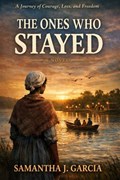
The Ones Who Stayed is a sweeping historical novel that follows the life of Eliza Mae Carter, an enslaved young woman in the Deep South who becomes a quiet architect of escape along the Underground Railroad. Set in the decades leading up to the Civil War, the novel explores how faith, memory, and collective resistance sustain a community facing systematic brutality.
The story opens on a Mississippi plantation where enslaved people are counted like property. From childhood, Eliza learns that survival requires obedience, silence, and emotional restraint. Her mother, Ruth, secretly teaches her to read scripture and preserve family memory through storytelling and song. These lessons become Eliza's first tools of resistance.
When Ruth is sold south and Eliza's younger brother is taken away, Eliza is forced into emotional isolation. She finds solace in Mary Belle, a gifted singer who embeds escape instructions into hymns, and in Jonah Reed, a preacher who offers spiritual leadership and moral clarity. Under the guidance of Harriet Boone, a free Black woman working as a covert conductor, Eliza becomes part of a fragmented network of resistance. Information is passed in pieces through midwives, field hands, singers, and travelers, forming an invisible infrastructure of escape.
As tensions rise and slave patrols intensify, Eliza helps organize a small group of fugitives. Their first attempt fails due to betrayal, resulting in capture and punishment. The experience hardens Eliza's resolve and deepens her understanding of sacrifice. She learns that freedom requires not only courage, but discernment and patience.
The second half of the novel follows the group's renewed escape attempt. Guided by coded songs and secret signals, they flee northward through forests, swamps, and hostile towns. Along the way, they encounter sympathetic abolitionists and Quaker families who provide temporary refuge. However, danger remains constant. One member is lost to river currents during a perilous crossing, and another deliberately draws pursuers away, sacrificing his life to ensure the others' survival.
The fugitives eventually reach a safe house near the Canadian border. Although physically free, they are emotionally shattered by loss, guilt, and survivor's remorse. The "House of Quiet" becomes a place of recovery and reckoning, where each character confronts trauma in different ways. Eliza struggles with leadership fatigue and questions whether she deserves survival when others did not.
In the final section, Eliza crosses into Canada and begins rebuilding her life. She works with abolitionist networks, helps new fugitives arrive safely, and documents stories of those who did not survive. Reunited with distant relatives and forming chosen family, she embraces her role as a keeper of memory. Her relationship with faith evolves from blind endurance into active moral responsibility.
The novel concludes with an epilogue set in the present day, following a young reader who discovers Eliza's story and becomes committed to preserving marginalized histories. This framing underscores the book's central message: freedom is not a finished achievement, but an ongoing responsibility carried by each generation.
Blending intimate character development with historical realism, The Ones Who Stayed honors the unnamed heroes of the Underground Railroad and affirms the enduring power of courage, community, and remembrance.