
- ISBN
- 9798223666806
- Genre
- Algemeen
- Verschenen
- 26-02-2026
- Bindwijze
- Ebook EPUB
- Taal
- Engels
- Uitgever
- ?Gyrus Vision
- Auteur(s)
- Sandeep Chavan
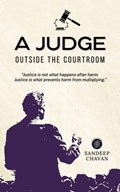
What happens when a judge speaks freely outside the courtroom?
A Judge Outside the Courtroom by Sandeep Chavan presents a powerful philosophical dialogue that explores justice beyond legal procedure, punishment, and institutional authority. Set during a public social gathering, a respected judge engages citizens, thinkers, journalists, and observers in an open conversation about some of society's most difficult questions:
Is revenge ever justice?
Why do justice systems appear to fail?
Can courts truly discover truth?
Why does public outrage often collide with institutional process?
Through calm and thoughtful exchanges, the discussion moves beyond courtroom drama to reveal the deeper structure beneath human conflict. The book examines justice not simply as a legal outcome, but as a dynamic process shaped by human behavior, cultural maturity, institutional limitations, and collective responsibility.
Rather than defending or criticizing existing systems, the dialogue uncovers how justice operates within real-world constraints — finite knowledge, limited authority, and the complexity of large societies. Readers are guided from individual emotional reactions toward a broader understanding of scale, consequence, and moral restraint.
Blending philosophy, social insight, and narrative storytelling, this work offers a fresh perspective on law, ethics, and civilization itself. It challenges common assumptions while remaining accessible to general readers, professionals, students, and anyone interested in understanding how societies maintain balance despite conflict and imperfection.
A Judge Outside the Courtroom is not a legal manual or political argument. It is an invitation to rethink justice as something that begins long before courts intervene — in everyday decisions, cultural values, and the human capacity for restraint over retaliation.
For readers of philosophy, ethics, law, sociology, and reflective nonfiction, this book offers a timely exploration of one enduring question:
How does civilization remain stable when justice itself is imperfect?