
- ISBN
- 9798232538439
- Genre
- Algemeen
- Verschenen
- 14-12-2025
- Bindwijze
- Ebook EPUB
- Taal
- Engels
- Uitgever
- ?Shelby Robinson
- Auteur(s)
- Shelby Robinson
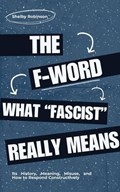
In today's polarized world, few words carry as much emotional and historical weight as fascist. Once a specific political ideology rooted in 20th-century Europe, the term has evolved into a catch-all accusation—used in online debates, political commentary, social media outrage, and everyday arguments to describe anyone perceived as controlling, authoritarian, or morally threatening. But as the word spreads, its meaning erodes—and with it, our ability to recognize real danger when it appears.
This book explores how "fascist" transformed from a precise historical term into a powerful rhetorical weapon—and why that transformation has serious consequences. Drawing on history, political theory, and modern discourse, it examines what fascism actually is, how scholars define it, and how it differs from ordinary political disagreement or unpopular authority. It also investigates why people reach for extreme language, what fears and emotions drive its use, and how political labels shape identity, belonging, and public dialogue.
More than a history lesson, this book is a guide for navigating a charged cultural landscape. It offers readers the tools to think critically about language, recognize genuine authoritarian warning signs, and engage in difficult conversations without resorting to dehumanizing labels. By restoring clarity to one of the most misused words in modern politics, the book aims to protect historical truth, strengthen democratic discourse, and remind us that language—used carefully—can illuminate rather than divide.
This is an essential read for anyone seeking nuance in an age of outrage, understanding in a time of polarization, and clarity in a world where words increasingly shape reality.