
- ISBN
- 9798231946754
- Genre
- Algemeen
- Verschenen
- 09-12-2025
- Bindwijze
- Ebook EPUB
- Taal
- Engels
- Uitgever
- ?Udaya R. Tennakoon
- Auteur(s)
- Udaya R. Tennakoon
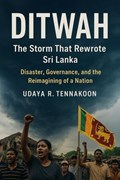
This book was written in the shadow of profound destruction and in the hope of transformation. Cyclone Ditwah did more than devastate landscapes and homes across Sri Lanka; it revealed the deeper fractures that have shaped the nation for decades. The storm exposed a political system struggling to meet the needs of its people, longstanding social divisions built on identity and inequality, and an environmental landscape weakened by years of neglect. In the aftermath of catastrophe, the question that emerged was not only how to rebuild what had been lost, but how to understand why the destruction unfolded as it did—and what possibilities lay beyond it.
This book is an attempt to answer that question. It is an exploration of how disaster illuminates power, governance, and the lived experiences of communities. It traces how Sri Lanka's political history, from colonial rule to contemporary crises, has shaped both institutional fragility and social resilience. It examines how identity politics, environmental degradation, and centralised authority combine to create patterns of vulnerability that disasters ruthlessly expose. And it looks at how ordinary people—communities, local leaders, activists, and citizens—navigate these realities with courage, solidarity, and imagination.
At its heart, this book argues that catastrophe offers more than tragedy; it offers a moment of reckoning. The destruction caused by Ditwah forces a confrontation with the limits of existing political structures and compels us to imagine alternatives. It reveals the urgent need for participatory governance, environmental stewardship, ethical leadership, and a renewed commitment to justice. Rebuilding must be more than reconstruction of roads and buildings—it must involve rebuilding trust, institutions, and relationships across the island's diverse communities.
This work is grounded in both analysis and empathy. It draws on academic perspectives, historical memory, and the testimonies of affected communities. Yet it is also a deeply personal project—driven by the belief that Sri Lanka holds the capacity to transform itself through collective will, critical reflection, and moral imagination. The storm that rewrote the island also rewrites how we think about the future.
This book is written for scholars, policymakers, activists, and citizens who wish to understand not only how calamity unfolded, but how a nation might rise beyond its brokenness. It is meant to encourage reflection, spark dialogue, and contribute to a broader conversation about democracy, identity, and resilience in a time of global uncertainty.
Ultimately, this book is a gesture toward possibility. Even in the most devastating moments, there exists the potential for renewal—for building a political culture that values inclusion, a society that honours diversity, and a state that protects the vulnerable. The hope that threads through these pages is simple yet profound: that Sri Lanka, shaped by its histories and its storms, can still reimagine itself into a more just, compassionate, and sustainable future.