
- ISBN
- 9798232466251
- Genre
- Algemeen
- Verschenen
- 08-10-2025
- Bindwijze
- Ebook EPUB
- Taal
- Engels
- Uitgever
- ?V.Knight-Lee
- Auteur(s)
- V.Knight-Lee
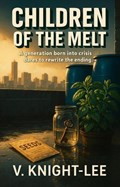
In a near-future New York shaped by heat, sudden floods, and drifting smoke, a volunteer seed vault becomes the city's quiet nervous system. From a mezzanine stacked with labeled envelopes and humming fans, neighbors teach hallways to breathe and rooftops to feed. When a storm redraws the map and a sinkhole exposes an old air shaft, the vault's caretakers must decide whether to guard what they've saved—or release it to everyone who needs it.
Archivist Eleanor Pierce keeps the ledger. Caleb, a systems-minded engineer, turns ordinary parts into resilience. Teenagers Zoe and Miles form the Runners of Consequence, learning the choreography of care: knock, listen, carry, return. City official Malcolm Reeves fights for plain-language policy while Mrs. Guzmán, keeper of recipes and stubborn basil, turns memory into a plan. A polished corporate emissary offers help with strings attached; a barber with a traveling chair offers dignity with no strings at all.
As heat indexes climb and the grid wavers, small failures threaten to become final ones: a canopy seam, a sulking battery, a rumor that kindness can be bought wholesale. Their answer is audacious and simple—the Great Seeding—an overnight effort to move a generation of tomorrow into kitchens, closets, lobbies, and school windowsills before the water arrives.
Children of the Melt is hope-forward climate fiction about the logistics of care and the power of ordinary competence. It balances urgency with warmth, city grit with communal grace. Instead of apocalypse, it offers Tuesdays: youth stipends and clapping codes, rooftop barrels and chalk waterlines, a glass jar with a key that comes to mean more than a door. The ending is closed, surprising, and hard-won—a testament to neighbors who refuse to surrender the ordinary and a reminder that resilience isn't a feeling, it's a schedule we keep for one another.