
- ISBN
- 9781067146849
- Genre
- Algemeen
- Verschenen
- 11-03-2026
- Bindwijze
- Ebook EPUB
- Taal
- Engels
- Uitgever
- ?Thornevald Publishing
- Auteur(s)
- Victor Moench
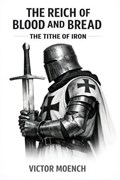
In the summer of 1409, the Teutonic Order arrives in the village of Stary Targ with iron scales and a sanctioned weight. The scales are rigged. Lukas the farmer picks up the weight, exposes the fraud, and is beaten to the ground in front of his children. His son Matthias watches from the crowd, then crawls to the centre of the square and picks up a sliver of iron that fell from the scales. He will carry it for twenty years.
The Tithe of Iron follows three lives through the machinery of a crusader state in its final decade. Matthias, the farmer's son turned state auditor, learns to record what the Order cannot be allowed to see — a secret ledger of the names it is trying to erase. Friedrich von Ravenstein, page, knight, Komtur, watches the institution he has given everything to finally demand the one thing he cannot give. Anna, Matthias's sister, sent to a convent at seven, becomes the Order's most dangerous clerk: the one who can read the documents it would prefer no one understood.
The novel moves from the rigged scales of a Vistula village to the counting-rooms and granary cellars of Marienburg, through the burning of Lithuanian settlements called hunts, to the field of Grunwald on 15 July 1410 — where the Order's fifty thousand lances meet the Polish-Lithuanian coalition and the geometry of the State is dismantled in an afternoon.
This is not a novel about the battle. It is a novel about the accounting that made the battle inevitable, and about three people who kept their own books while the official record burned.
The Tithe of Iron is for readers who want historical fiction that treats power as a system, violence as a transaction, and the act of writing a name as the most radical thing a person can do.